Loading…

Loading…
Fill the form below to begin your journey with us.
10+2 examination with at least 50% marks in aggregate (5% relaxation in case of SC/ST category) with English, Physics and Chemistry as compulsory subjects, along with one of the following subjects: Biology / Mathematics.
First Year B. Pharm: Candidate shall have passed 10+2 examination conducted by the respective state/central government authorities recognized as equivalent to 10+2 examination by the Association of Indian Universities (AIU) with English as one of the subjects and Physics, Chemistry, Mathematics (P.C.M.) and or Biology (P.C.B. /P.C.M.B.) as optional subjects individually. Any other qualification approved by the Pharmacy Council of India as equivalent to any of the above examinations.
B. Pharm Lateral Entry (to third semester):
A pass in D. Pharm. Course from an Institution approved by the Pharmacy Council of India under Section 12 of the Pharmacy Act.

Our main Introduction, mission, vision is transformation and transmission of information to the society also vision of the library is same as the vision of the university.

Playing sports encourages the spirit of a team player and sportsmanship. Playing different games cherish the discipline among the students by training and helping them to maintain
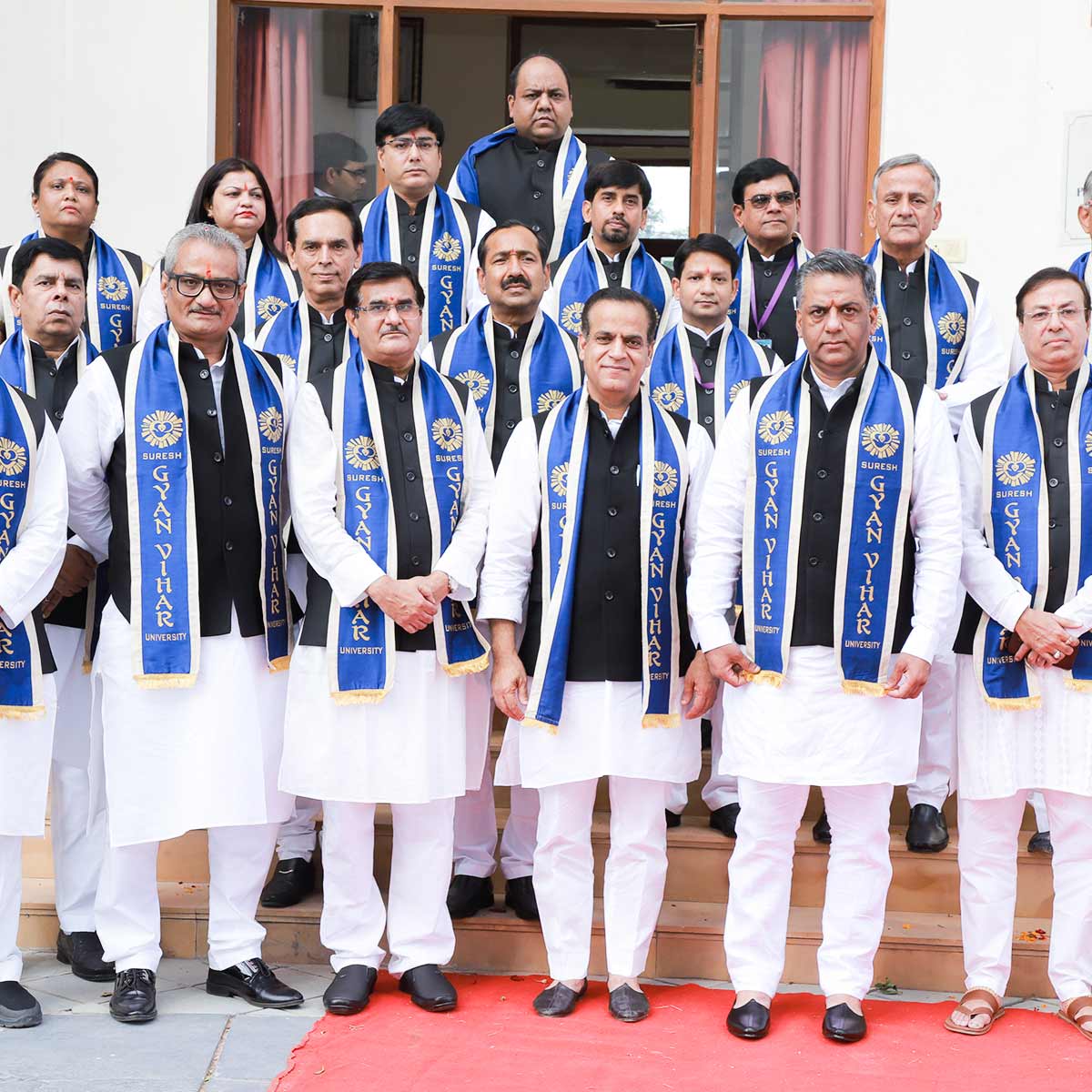
Suresh Gyan Vihar, a NAAC accredited grade A University has created a 20 points vision, strategy, and plan for a digital transformation. These vision statements are broadly split across five areas Enable Continuous learning Modernise currculum, content an

SGVU offers compelling advantages.

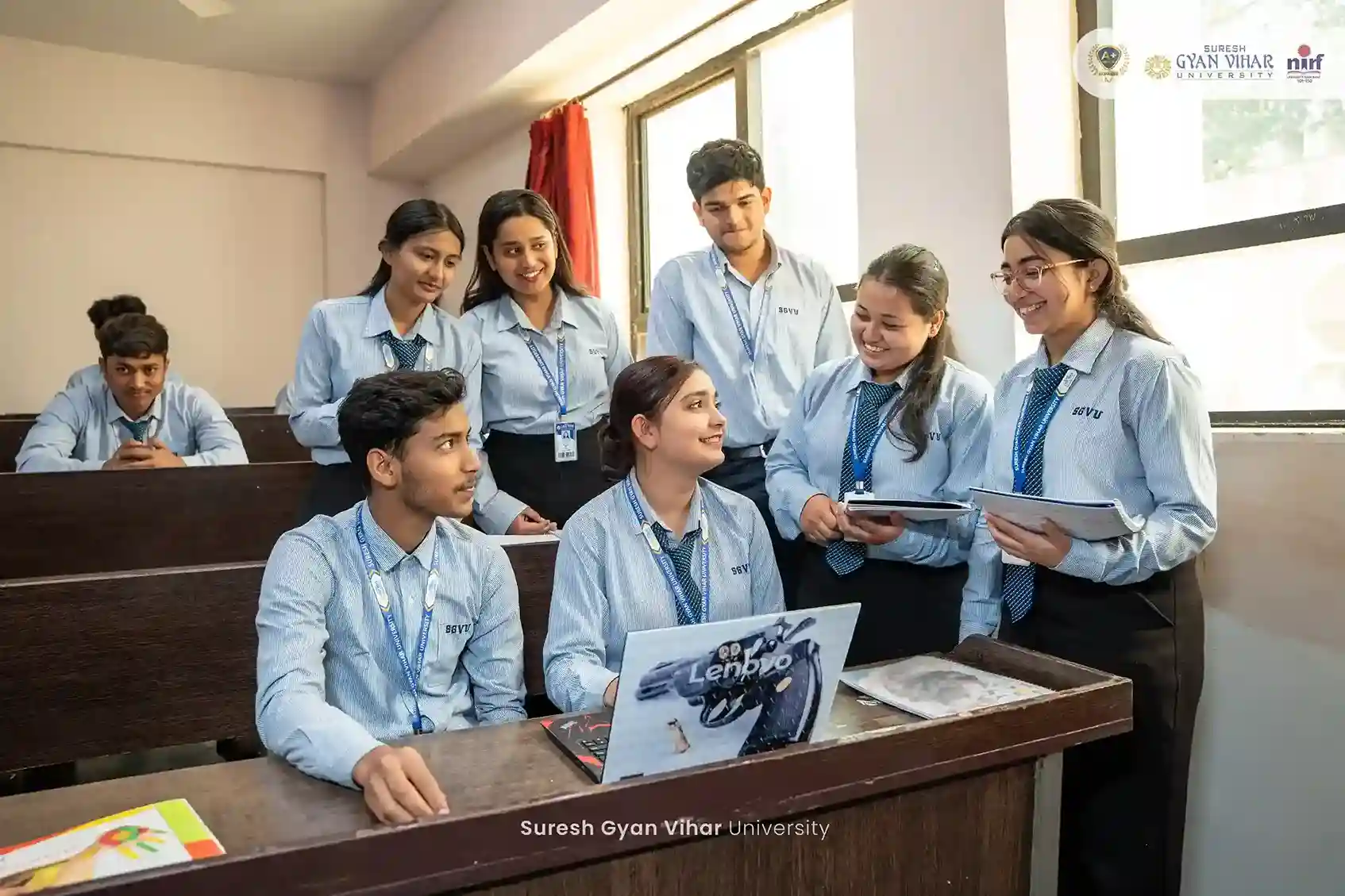
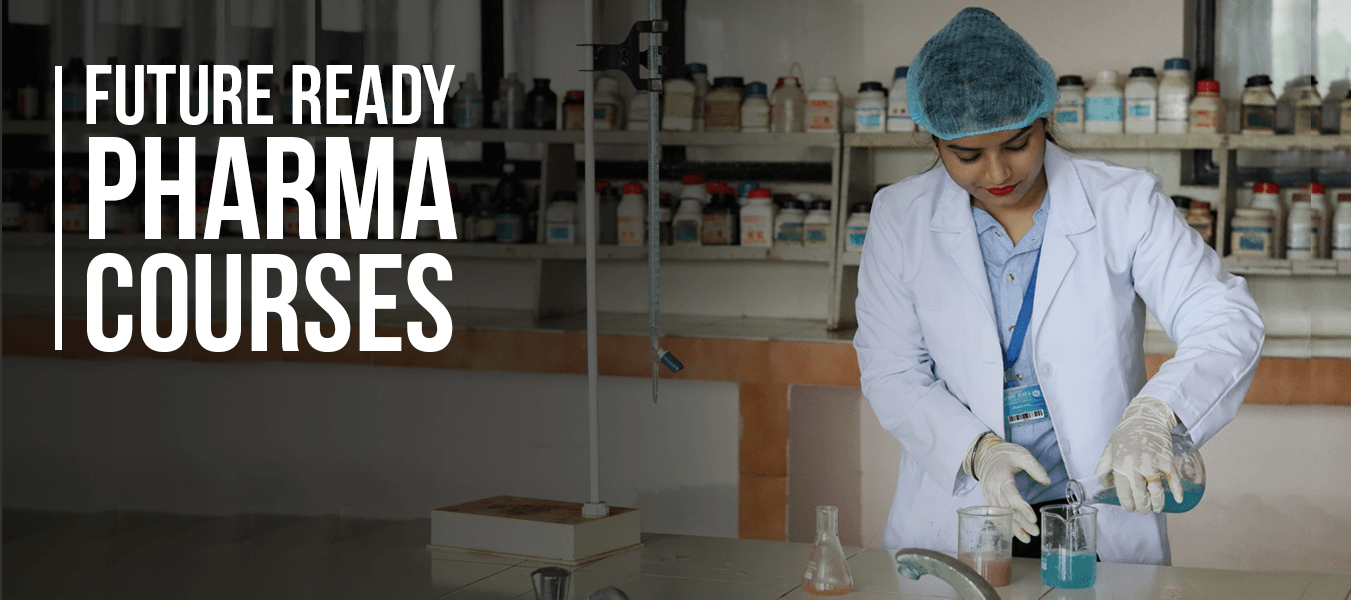
School of Pharmacy runs four years Undergraduate B. Pharm. Program which offers exhaustive exposure to various practical aspects of the research methodologies, instrumental techniques, emerging areas, industrial operations and also serves a prerequisite for pharmacist registration. School is approved by Pharmacy Council of India (PCI), All India Council of Technical Education (AICTE). Over 34 experienced & qualified employees and about 450 students currently make the family of the school.
Vision
To be a leader in pharmaceutical sciences & pharmacy practice education, training, research and continuous professional development for pharmacists and Pharmaceutical Scientists providing competent patient care and nurturing drug discovery and development.
Mission
The department strategic plan and vision document envisages introducing academic programs that are innovative, interdisciplinary, multidisciplinary and cutting-edge technology based programs.
The research surge that is translational and transformational will be provided by the university by providing leadership, resources, and collaborations. A robust research networking plan has been set with specific processes with assigned outcomes that have defined benefits to various stakeholders.
The department will exploit the advantage that it has of having health sciences based academic programs through interprofessional education and care.
Program Outcomes:Subject Proficiency
Specialised Medicine Knowledge: Scientific information and knowledge concerning basic principles of Pharmaceutics including Cosmeticology, Pharmacology, Pharmaceutical & Medicinal Chemistry, Pharmacognosy including herbal medicines.
Specialised Laboratory Knowledge: Basic understanding of synthesis & analysis of medicinal agents, their MoA’s, drug interactions and other technical evidences related to medicines.
Specialised Knowledge for Practice: In depth knowledge of Formulation Development, Quality Assurance and Storage of various Pharmaceutical Dosage Forms including Herbal Medicines.
Personal Skills
Problem-Solving and Decision-Making Abilities: Enhance time management, resource management and organizational skills. Development and Implementation of Plans and organization of work to be completed in deadlines.
Modern Tool Usage: Study, select and apply best possible methods, procedures, resources and modern pharmacy-related computing tools with an understanding of the limitations.
Leadership Skills and Teamwork: Understand and consider motivational issues for leadership and team-building.
Communication Skills: Acquire good oral and written communication.
Professional Skills
API and Formulations Development: Synthesis of APIs, intermediate products, development & analysis of various pharmaceutical dosage forms, quality assurance of various pharmaceutical dosage forms including those of herbal origin as per standards of official books, WHO, ICH and other regulatory agencies like USFDA, MHRA etc.
Scientific Data & Document Preparation: Writing of scientific papers, conference presentations based on the results of the research conducted along with Production and QC Documents, Product Labels, Patient Information Leaflets, Regulatory Documents etc.
Public Health Patient-Centred Care: Acquiring current knowledge of Community Pharmacy & Clinical Pharmacy and use the knowledge in the best interest of the patients and serving the community along with maintaining high standards of professional ethics and participation in health care programs.
Entrepreneurship: Acquire the skills to run retail or wholesale business of pharmaceuticals and understanding concept for setting up a pharmaceutical unit.
Research and Innovation: Acquire the skills and knowledge to design drug and drug delivery system for concerned public health and safety.
Pharmaceutical Product Marketing: Understand the concept of synthesis & analysis of medicinal agents, their mode and mechanism of action, drug interactions, patient counselling and adequate technical information and used to be exchanged with the physician and other health professionals regarding diagnosis, prevention and therapeutic purposes for product detailing, marketing, distribution and selling of pharmaceutical products.
Attitudes and Values
Ethical Attitude: Knowledge of ethical responsibilities, honour personal values and apply them in professional and social contexts of decision making and take responsibility for the outcomes associated with the decisions.
Social and Cultural Awareness: Using knowledge of pharmaceutical sciences for generating awareness on critical healthcare issues and assess social, health, safety and legal issues and the consequent responsibilities relevant to the professional pharmacy practise along with the acknowledgement of social, economic, environmental, biological and emotional determinants of health/pharmacy sector in a given case and take them into account while planning professional strategies.
Programme Specific Outcomes
Salient Features:Approvals & Accreditations
Approved and regulated by Pharmacy Council of India (PCI), All India Council for Technical Education (AICTE) & Accredited as A Grade University by National Assessment and Accreditation Council (NAAC). National Institutional Ranking Framework (nirf) Rank band: 75-100.
Research Profile
More than 350 Research Publications, 10 patents, 2 Tech Transfers and 10+ Global Linkages with Industries and International Academic Organisations.
Workshops and Seminars
Workshops and Seminars are conducted on a regular basis on various aspects related to pharmaceutical sciences. Few of the conducted are current aspects of Pharmaceutical Trends as Drug Regulatory Affairs (DRA), Intellectual Property Rights (IPR), Validation & Instrumentations, Computer Aided Drug Designing (CADD) etc. are organised to develop research skills in students.
Industrial Visits
Various visits to pharmaceutical industries and research institutions are a fundamental part of the curriculum which helps to develop technical and research aptitude in students.
Guest Lectures
Guest Lectures from industry, academics and other related areas are conducted to acquaint students with the current pharmaceutical trends.
Professional Development
Various sessions of Soft Skills, Communications, and Interview preparations are conducted on regular basis to enhance personality and employability of students.
Holistic Growth of Students
Participation in technical events, sports and cultural activities help in the holistic development of students.
Course OverviewFoundation Courses
Courses which provide base for learning the core courses.
Core Courses
Courses which helps in learning the basics of key area / programme / discipline.
Specialized and Elective Courses
Those courses which provide in-depth knowledge and increase core competencies of students within the discipline. Workshops, Seminars, Guest lectures, Educational Trips, Industrial Training, Co-curricular Events, Incubation Projects, Community Projects, Projects with NGOs etc. constitutes an integral part of curriculum.
Industrial and Academic Tie Ups
Tie-ups with Industry
Industry Collaborative Projects
Lectures by Industry Experts
Industrial Internships
Student Exchange Programs